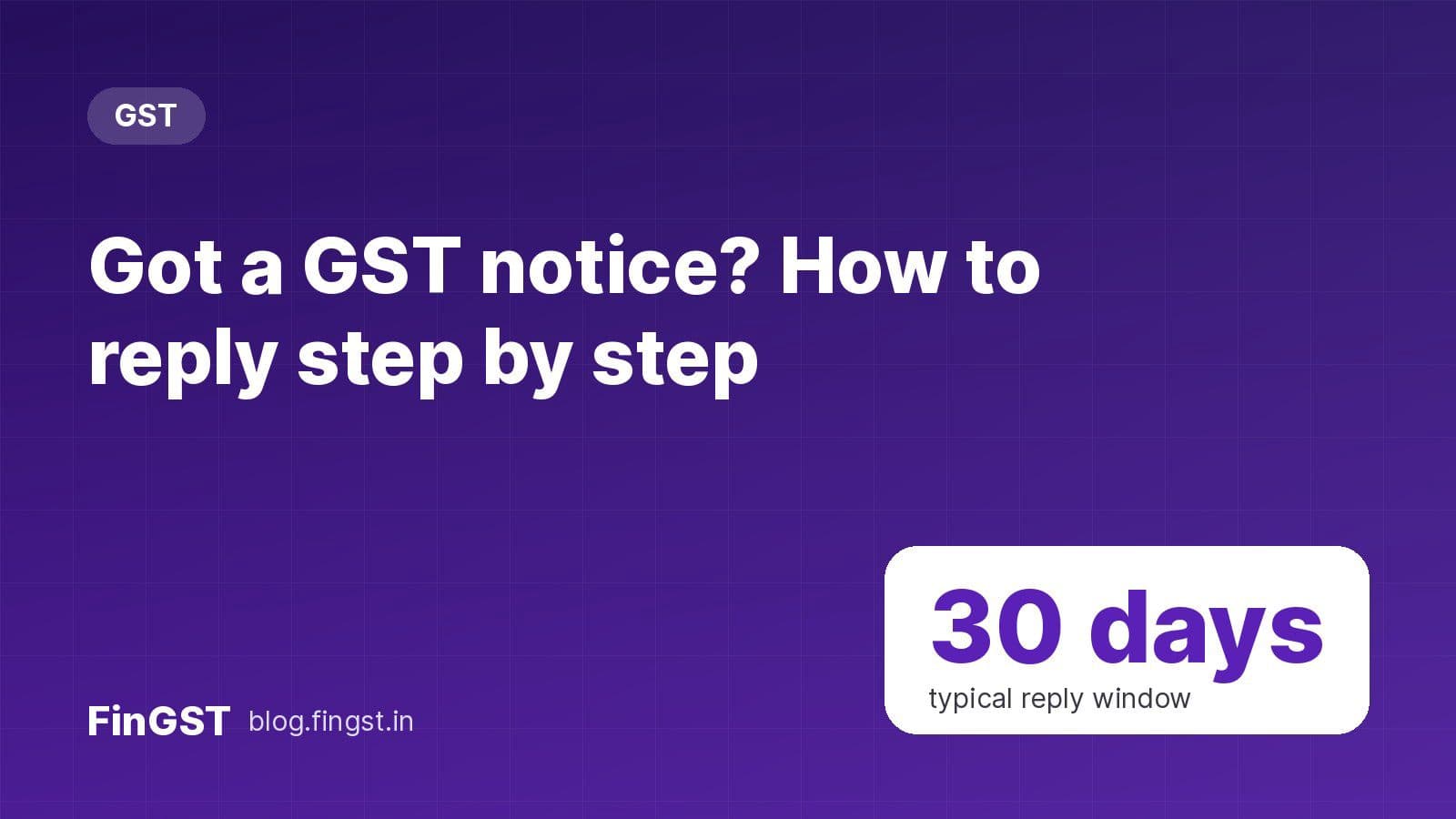
A GST notice is not always an accusation. Many are automated mismatch intimations that you can close with a clear reply. The key is to know which form you received.
The common notices
| Notice | What it means | Reply form | Time to reply |
|---|---|---|---|
| DRC-01B | Liability in GSTR-1 is higher than in GSTR-3B | Part B of DRC-01B (pay or explain) | 7 days |
| DRC-01C | ITC in GSTR-3B is higher than in GSTR-2B | Part B of DRC-01C (pay or explain) | 7 days |
| ASMT-10 | The officer found discrepancies while scrutinising your returns | ASMT-11 | 30 days (or as stated) |
| DRC-01A | Pre-notice intimation of tax the officer proposes to demand | Part B of DRC-01A | As stated |
| DRC-01 | Summary of the formal show-cause notice | DRC-06 | 30 days (or as stated) |
Why DRC-01B and DRC-01C matter
If you don't reply to DRC-01B or DRC-01C, the portal can block you from filing your next GSTR-1 (or reduce your ability to use ITC). Reply within 7 days, even if it's only to explain a timing difference.
How to write a good reply
- Reconcile first. Download the returns for the period and match them month by month.
- Explain each difference with numbers: "₹2,40,000 shown in GSTR-1 for July was reported in GSTR-3B for August; see attached."
- Attach evidence: invoices, ledgers, credit notes and IMS actions.
- Pay what is genuinely due through DRC-03 and quote the ARN in your reply.
- Ask for a personal hearing if the issue is complex.
Paying early can wipe out the penalty
For FY 2024-25 onwards (Section 74A, non-fraud cases), if you pay the tax and interest within 60 days of the show-cause notice, no penalty is levied. Before the notice, paying with interest closes the matter.
Coming in April 2027
The 57th Council recommended a ₹10,000 minimum before a show-cause notice can be issued. It needs a law amendment and is targeted for April 2027.
Never ignore a notice because the amount is small. An unanswered notice becomes an order, and an order becomes a recovery from your bank account.