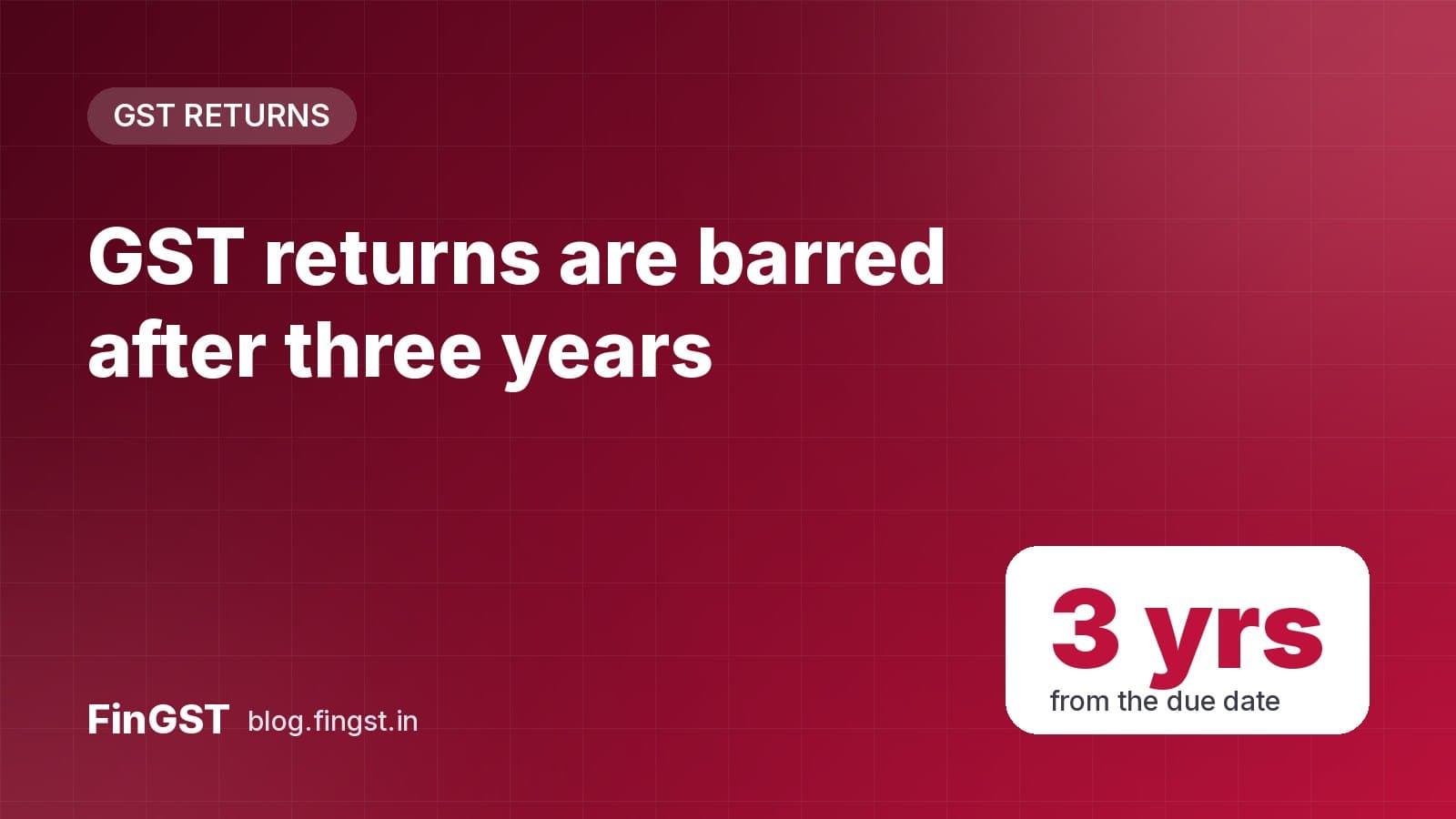
If you have old GST returns you never filed, the clock is running. Since the Finance Act, 2023 (effective 1 October 2023 through Notification No. 28/2023-Central Tax), a GST return cannot be filed once three years have passed from its due date. The GST portal enforces this.
Which returns are covered
Returns under Section 37 (outward supplies), Section 39 (tax payment), Section 44 (annual return) and Section 52 (TCS):
GSTR-1, GSTR-1A, GSTR-3B, GSTR-4, GSTR-5, GSTR-5A, GSTR-6, GSTR-7, GSTR-8, and GSTR-9/9C.
How the bar works
Count three years from each return's due date. After that, the portal won't accept it. The bar rolls forward every month.
GSTN's example: from 1 December 2025, these were the latest periods to become barred.
| Return | Barred from 1 Dec 2025 |
|---|---|
| GSTR-1 / IFF | October 2022 |
| GSTR-1 (quarterly) | July–September 2022 |
| GSTR-3B (monthly) | October 2022 |
| GSTR-3B (quarterly) | July–September 2022 |
| GSTR-4 | FY 2021-22 |
| GSTR-5, 6, 7, 8 | October 2022 |
| GSTR-9 / 9C | FY 2020-21 |
To check your own pending returns, take each return's due date and add three years.
Why it matters
A barred return stays unfiled for good, and that can mean:
- notices and demands based on the department's own estimates,
- trouble claiming or proving ITC for your buyers, and
- problems with registration status and future compliance.
What you should do
- Open Returns → Return Dashboard and list every unfiled return.
- Work out each one's three-year date and file the oldest first.
- Reconcile your books before filing, since late returns still attract late fees and interest.
- If a return is already barred, talk to your tax adviser about what options remain.