Section 122(1A) of the CGST Act imposes a penalty, equal to the tax evaded or the ITC availed or passed on, on any person who retains the benefit of certain transactions (such as supplies without invoices or fake invoices) conducted at their instance. It is often used against people behind fake-invoice rackets: directors, brokers and consultants.
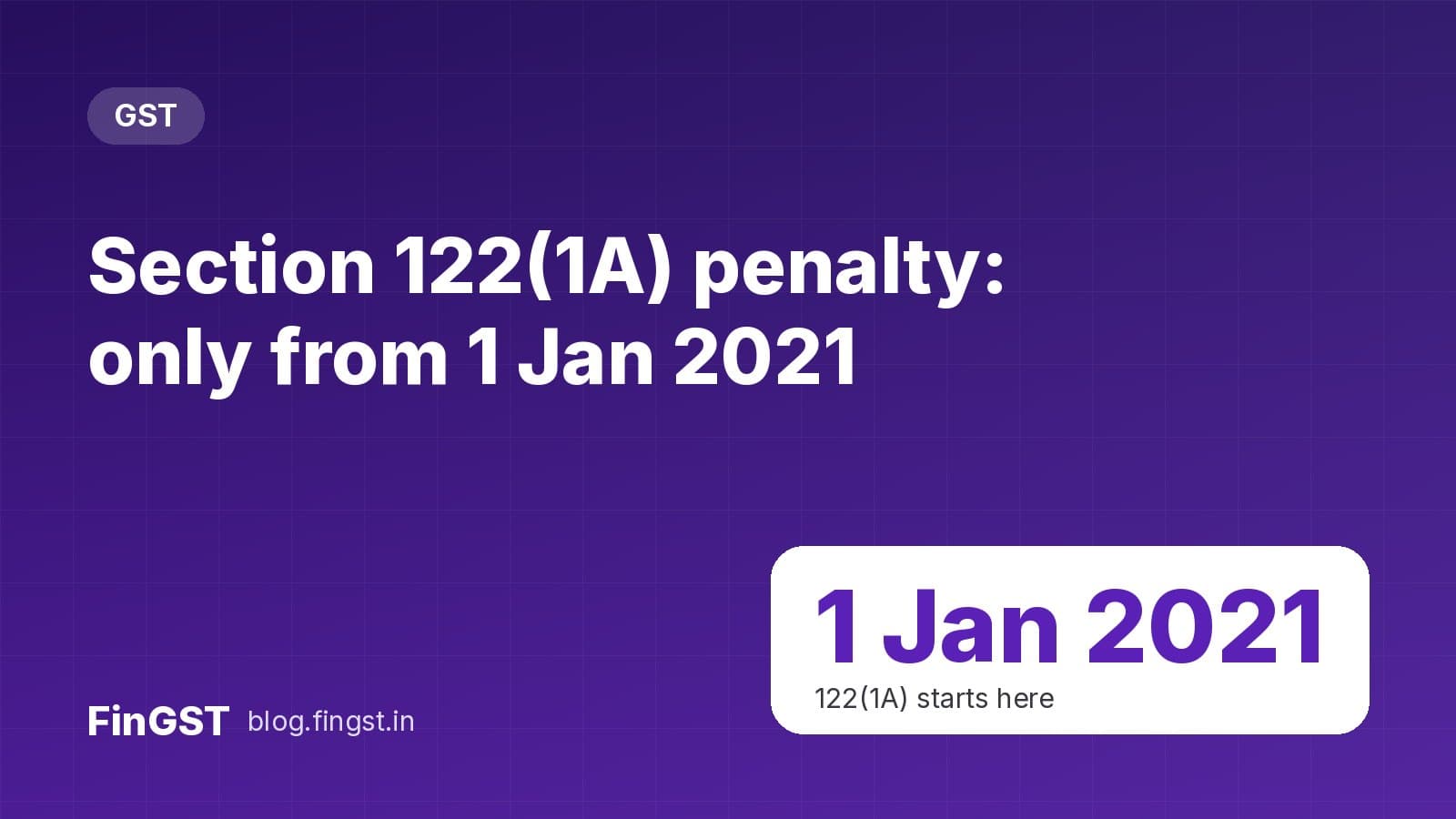
It was inserted by Section 126 of the Finance Act, 2020 and came into force on 1 January 2021 (Notification No. 92/2020-Central Tax).
The ruling
In Gourav Kumar v. Union of India (Punjab & Haryana High Court, reported 23 November 2026):
- A show-cause notice of 27 March 2024 and an order of 31 January 2025 invoked Section 122(1A).
- The court held that nothing in the law makes the provision retrospective, by express words or necessary implication. So it applies prospectively only.
- The notice and order were quashed as far as they concerned the petitioner.
Three High Courts now agree
| Court | Case | Date |
|---|---|---|
| Bombay HC | Amit Manilal Haria v. Joint Commissioner, CGST (WP No. 5001 of 2025) | 25 February 2026 |
| Delhi HC | Parag Garg v. Commissioner, Adjudication, CGST Delhi West (W.P.(C) No. 13883 of 2026) | 29 September 2026 |
| Punjab & Haryana HC | Gourav Kumar v. Union of India | reported 23 November 2026 |
The Delhi High Court put it clearly: what matters is when the act or transaction took place, not when the notice was issued.
What to check in your notice
- Which section is invoked? Penalties on persons other than the taxpayer are often under Section 122(1A).
- Which period is covered? Transactions before 1 January 2021 are outside it.
- Split periods. If the notice covers both sides of that date, argue that the earlier part must be dropped.
- Raise it early, in your reply and at the personal hearing, citing all three rulings.
Tip: These rulings deal only with the start date. Penalties under other parts of Section 122, and the tax demand itself, are separate questions, so reply to every ground in the notice.