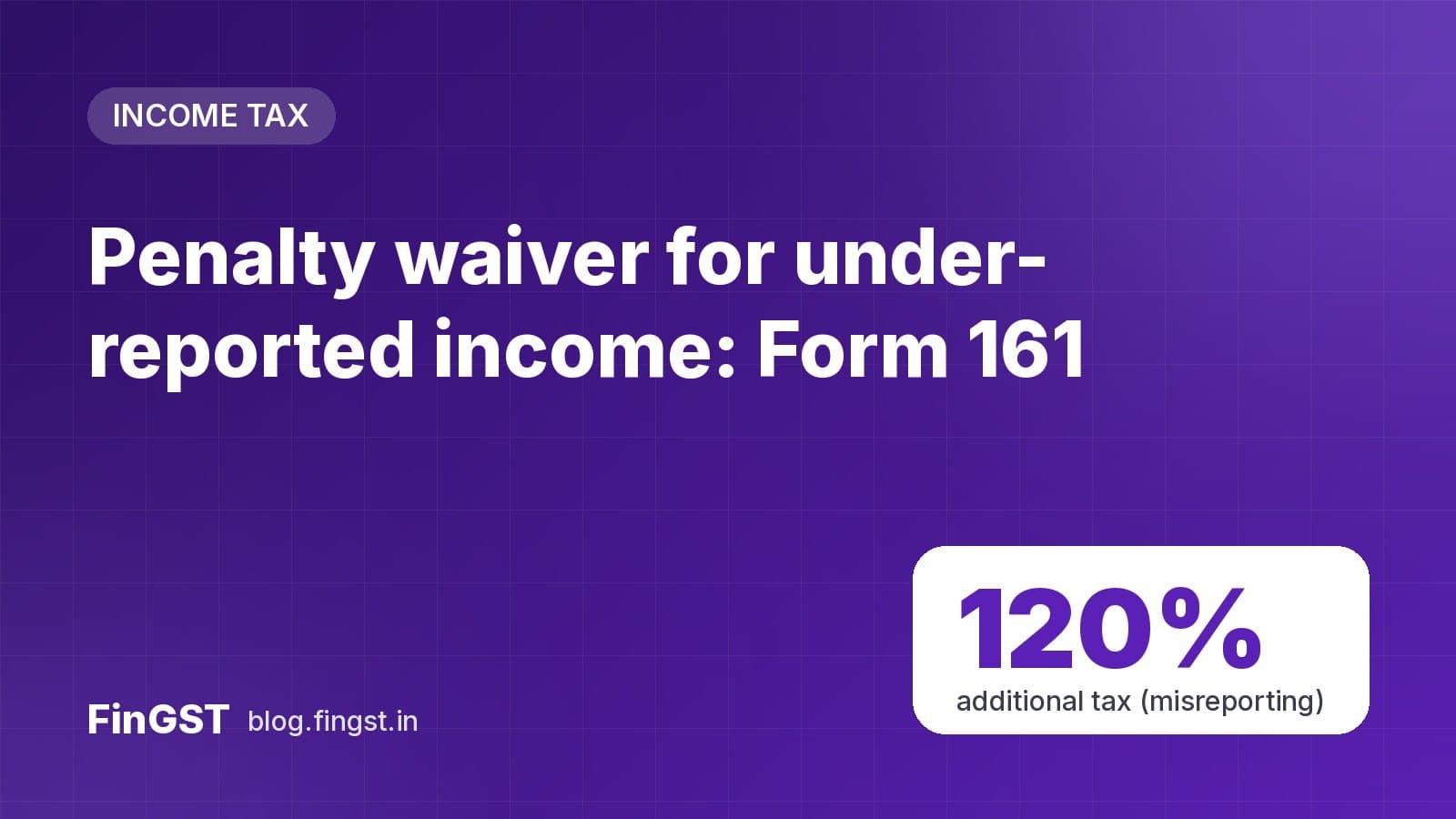
Under the Income-tax Act, 2025, a taxpayer whose assessment shows under-reported income can apply to have the penalty waived under section 440(2), by paying the tax, interest and an additional income-tax instead of the penalty. CBDT has revised the application form.
The Income-tax (Sixth Amendment) Rules, 2026 (Notification No. 134/2026 dated 8 October 2026) amend Rule 231 to cover waiver (not just imposition) and replace Form No. 161. They apply from the date of publication.
What Form 161 asks for
Part A: personal information. Name, PAN, address and contact details.
Part B: the order and the payments.
- tax year, the section under which the assessment or reassessment order was passed, its DIN, date of order and date of service
- the due date for payment in the notice of demand
- income assessed and under-reported income, split into amounts arising from misreporting under section 439(11)(a) to (f), from section 439(11)(g), and from not misreporting
- tax and interest payable on the assessed income
- tax payable on the under-reported income (section 439(12))
- additional income-tax in lieu of penalty, at 100% of the tax on one part and 120% of the tax on the other part, as set out in the form
- the total payable for the waiver, and the challan details of what has been paid
Declarations you make
- No appeal has been filed against the order, and
- no appeal will be filed before the period in section 440(5) ends.
The form notes that the total for the waiver is to be paid by the due date in the notice of demand, and that some details will be pre-filled.
Who should consider it
Taxpayers with an assessment order showing under-reported income who would rather settle and close the matter than face penalty proceedings and appeals. It's a trade-off, so work out the numbers with your CA, especially the effect of giving up the right to appeal.