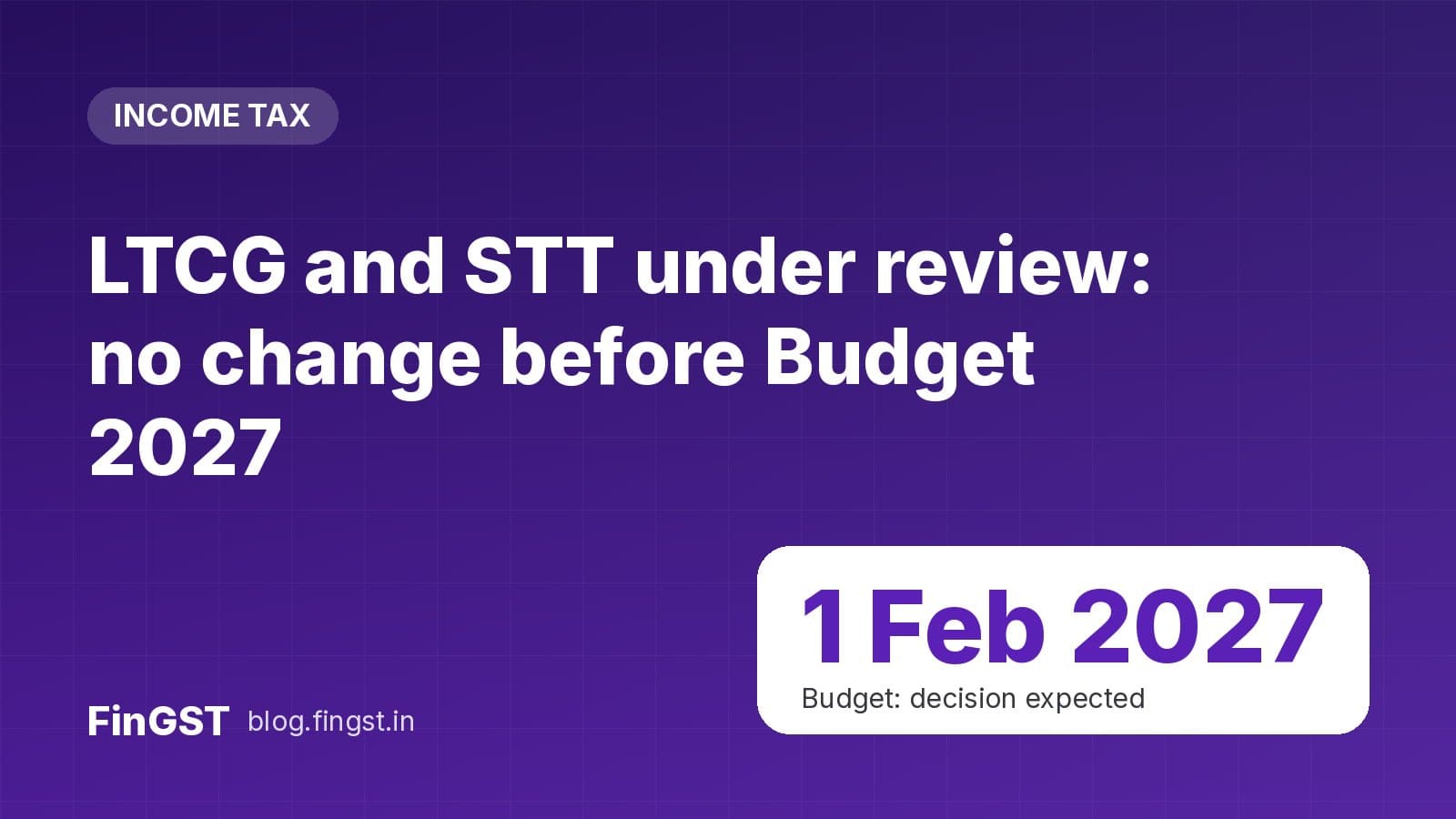
CBDT Chairman Ravi Agrawal says the government is examining proposals to change long-term capital gains (LTCG) tax and securities transaction tax (STT). Any decision will come with the Union Budget 2027-28 on 1 February 2027.
"We will consider it, and I'm sure on February 1 you will get to know."
Ravi Agrawal, CBDT Chairman, speaking at the India International Trade Fair, New Delhi
He did not say whether any proposal would be accepted.
What is being proposed
Industry bodies and other stakeholders have asked for:
- abolishing LTCG tax on listed equities,
- lower STCG (short-term capital gains) rates,
- changes to STT,
- a longer holding period for equity to count as long-term, 18 or 24 months instead of 12,
- separate treatment for foreign portfolio investors, such as computing their gains in US dollars.
These are suggestions under review, not decisions. Pre-Budget reports suggest economists were largely against scrapping LTCG.
The rules that apply today
| Listed equity shares and equity mutual funds (STT paid) | |
|---|---|
| Long-term after | 12 months |
| LTCG rate | 12.5% on gains above ₹1.25 lakh a year |
| STCG rate | 20% |
| Surcharge | Capped at 15% on these gains, plus 4% cess |
These rates were set in Budget July 2024 and carried into the Income-tax Act, 2025 without change.
What investors should do now
- Don't sell or delay sales based on speculation. The current law applies to every sale until a change is announced and takes effect. Budget changes usually apply from a stated date, often 1 April.
- Use this year's ₹1.25 lakh exemption. If you hold equity with unrealised long-term gains, you can book up to ₹1.25 lakh of gains tax-free before 31 March 2027 and reinvest. Count brokerage and other costs.
- Harvest losses. Short-term losses can be set off against both short- and long-term gains. Unused losses carry forward for 8 years only if you file your return on time.
- Remember the ₹12 lakh rebate doesn't cover these gains. Tax on special-rate capital gains is payable even if your total income is under ₹12 lakh.
What to watch on 1 February 2027
- whether the ₹1.25 lakh exemption is raised,
- any change to the 12-month holding period,
- changes to STT rates on delivery, futures or options,
- the date from which any change applies.
Tip: Download your capital-gains statement from your broker now and match it with your AIS. It makes year-end harvesting and your next ITR much easier.