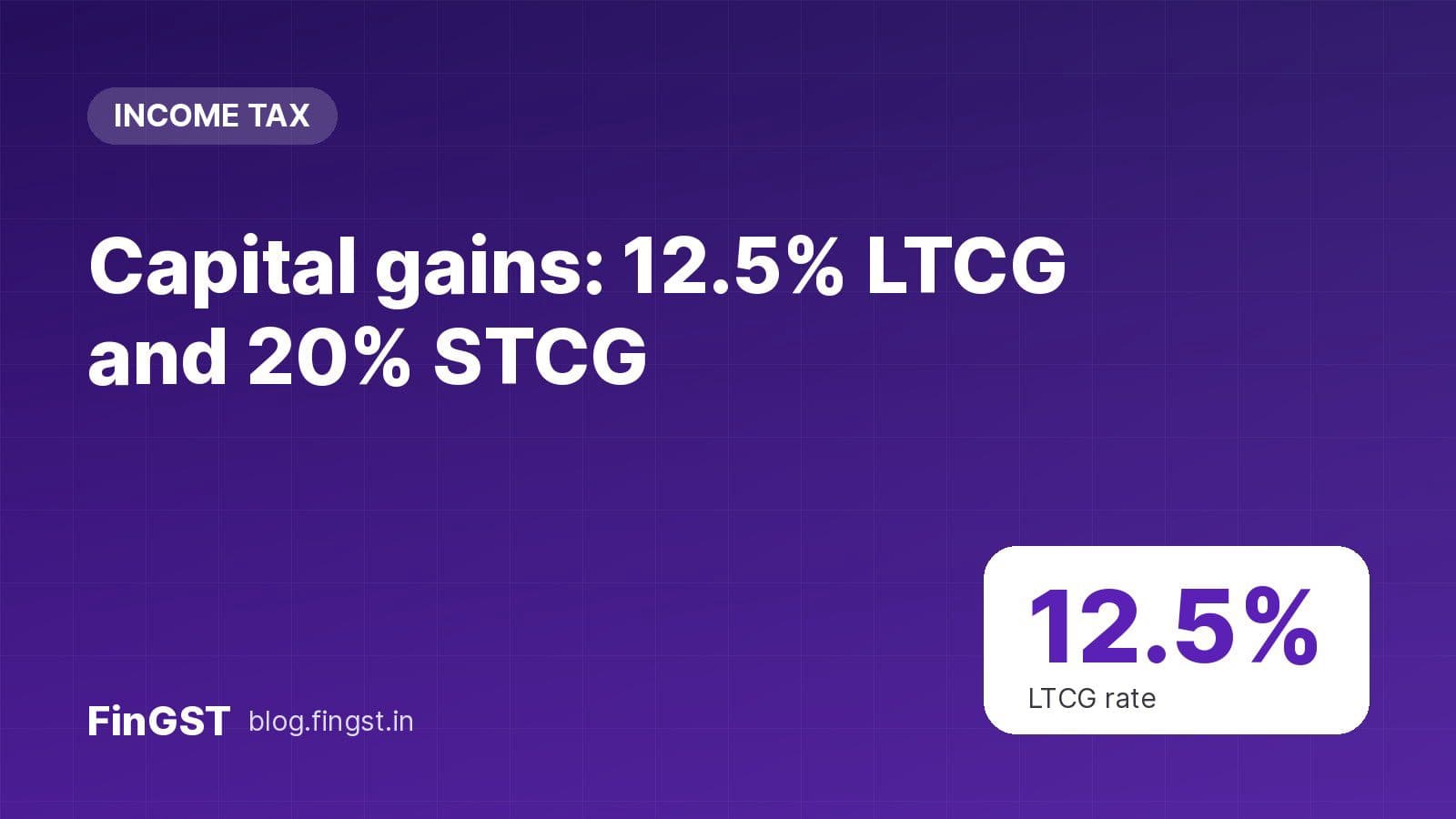
The capital gains overhaul in Budget July 2024 still sets the rates in 2026. The Income-tax Act, 2025 carried them over unchanged.
Holding periods
| Asset | Long-term after |
|---|---|
| Listed shares, equity mutual funds, listed bonds, REIT/InvIT units | 12 months |
| Everything else: property, unlisted shares, gold, gold ETFs and FoFs | 24 months |
The rates
| Asset | Short-term | Long-term |
|---|---|---|
| Listed equity shares, equity MFs (STT paid) | 20% | 12.5% above ₹1.25 lakh a year |
| Property, gold, unlisted shares | Slab rate | 12.5% without indexation* |
| Debt MFs bought on/after 1 Apr 2023, market-linked debentures | Slab rate | Slab rate (always) |
| Gold ETFs, gold mutual funds | Slab rate | 12.5% (after 12 months for ETFs, 24 for FoFs) |
*For land or buildings bought before 23 July 2024, resident individuals and HUFs can pay 20% with indexation instead, whichever is lower. See our property sale guide.
Add surcharge (capped at 15% on these gains) and 4% cess.
Equity example
You sell shares held for 2 years with a gain of ₹3,00,000.
- Exempt: ₹1,25,000
- Taxable: ₹1,75,000 × 12.5% = ₹21,875 + cess
Tips to cut tax legally
- Harvest gains each year. Sell and buy back equity to use the ₹1.25 lakh exemption before 31 March. Watch transaction costs.
- Harvest losses. Short-term losses can be set off against short- and long-term gains. Long-term losses only against long-term gains. Unused losses carry forward 8 years if you file on time.
- Hold for 12 months where you can. The jump from 20% to 12.5% is significant.
- The ₹12 lakh rebate doesn't cover these gains. Under the new regime, the rebate doesn't apply to tax on special-rate capital gains.
Reporting
Capital gains go in Schedule CG of ITR-2 or ITR-3. Download the capital-gains statement from your broker and the AIS, and match them before filing.