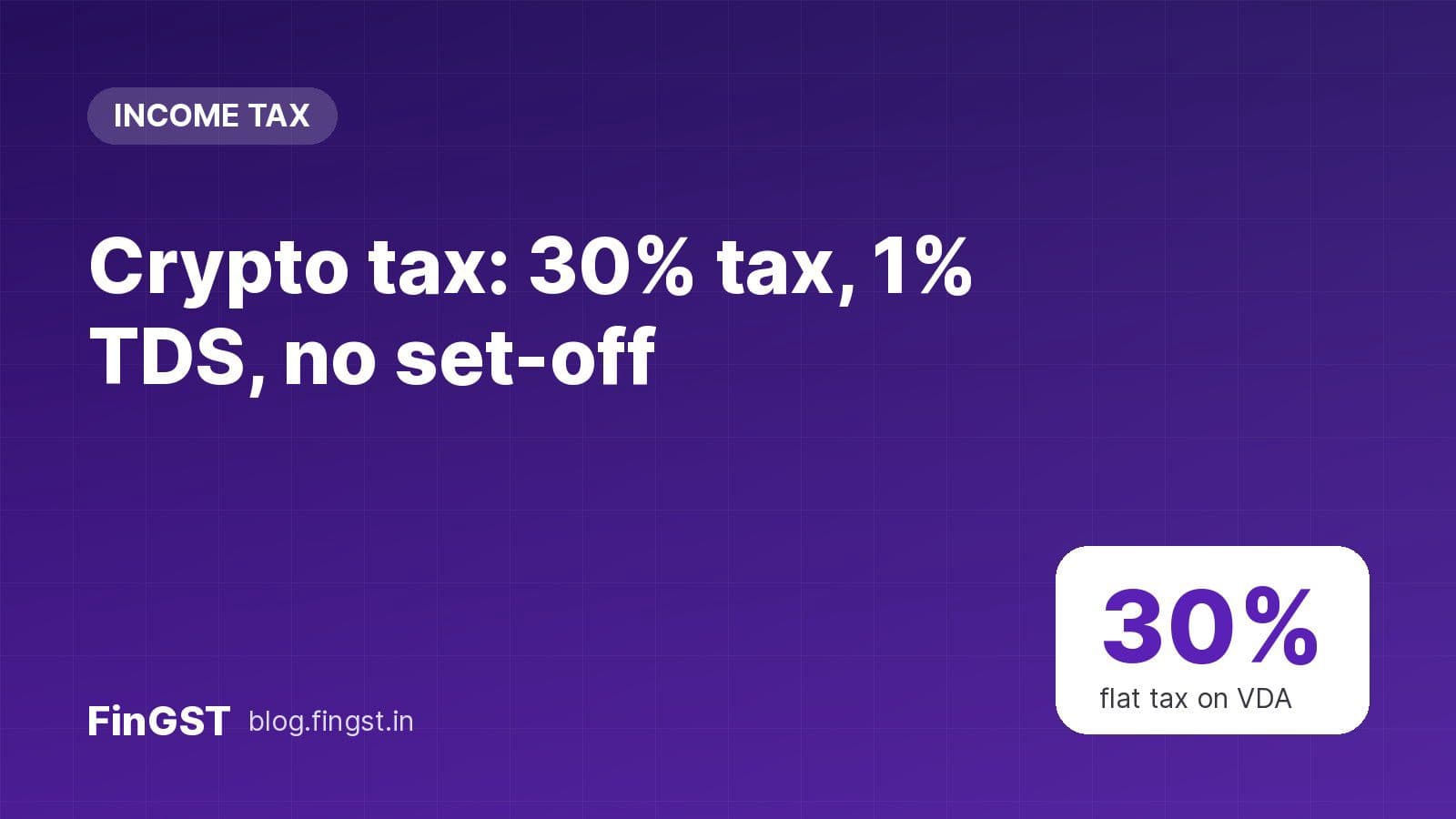
India taxes virtual digital assets (VDAs), including cryptocurrencies, NFTs and similar tokens, under a separate, strict regime. It started in 2022 and carries into the Income-tax Act, 2025.
The four rules
| Rule | Detail |
|---|---|
| Flat 30% tax on gains | Plus 4% cess and any surcharge. No slab benefit and no rebate |
| Only cost is deductible | No deduction for exchange fees, internet costs or interest |
| No set-off of losses | A VDA loss can't reduce other income, or gains on another VDA |
| No carry-forward | Losses lapse at year-end |
1% TDS
The buyer, usually the exchange, deducts 1% TDS on the sale value when the total in a year exceeds ₹10,000 (₹50,000 for specified persons such as non-business individuals). The TDS shows up in Form 26AS and AIS, so the department knows about your trades.
Example
- Bought Coin A for ₹1,00,000 and sold it for ₹1,50,000 → gain ₹50,000
- Bought Coin B for ₹80,000 and sold it for ₹50,000 → loss ₹30,000
Tax is on ₹50,000 (the loss on B is ignored): 30% = ₹15,000 + cess = ₹15,600.
Other situations
- Crypto received as a gift: taxable for the recipient if it exceeds ₹50,000 and isn't from a relative.
- Mining or staking rewards: taxed when received (generally as income from other sources or business income), then again at 30% on sale.
- Crypto-to-crypto swaps: each swap is a transfer, so gain and TDS apply.
Reporting
- Report each transfer in Schedule VDA of ITR-2 or ITR-3, with the dates of acquisition and transfer, cost and sale value.
- Business-level traders use ITR-3.
- Since 1 April 2026, reporting entities such as exchanges must file detailed transaction reports with the department, and undisclosed VDA can be assessed in search cases.
Keep exchange statements for every year. With no loss set-off and data reported to the department, accurate records are your only protection.