India's income-tax law was rewritten. The Income-tax Act, 2025 and the Income-tax Rules, 2026 took effect on 1 April 2026 and replaced the Income-tax Act, 1961 and the 1962 Rules.
The aim was simplification: fewer words, plainer language and tables instead of long provisos. Tax rates and the basic structure did not change as a result of the rewrite.
"Tax year" replaces PY and AY
Under the old law, income earned in a previous year (PY) was taxed in the following assessment year (AY). FY 2025-26 income was assessed in AY 2026-27.
The new Act uses one term: tax year, meaning the financial year in which you earn the income.
| Income earned | Old term | New term |
|---|---|---|
| 1 Apr 2025 – 31 Mar 2026 | PY 2025-26 / AY 2026-27 | (still under the 1961 Act) |
| 1 Apr 2026 – 31 Mar 2027 | — | Tax year 2026-27 |
Which Act applies to what
- FY 2025-26 income (AY 2026-27): the 1961 Act applies. Returns being filed now, belated and revised returns until 31 December 2026 and 31 March 2027, and assessments and appeals for that year and earlier all follow the old Act and its section numbers.
- Income from 1 April 2026 onwards: the 2025 Act applies. That includes TDS deducted since April 2026, advance tax for tax year 2026-27 and the return you file in 2027.
What you will notice
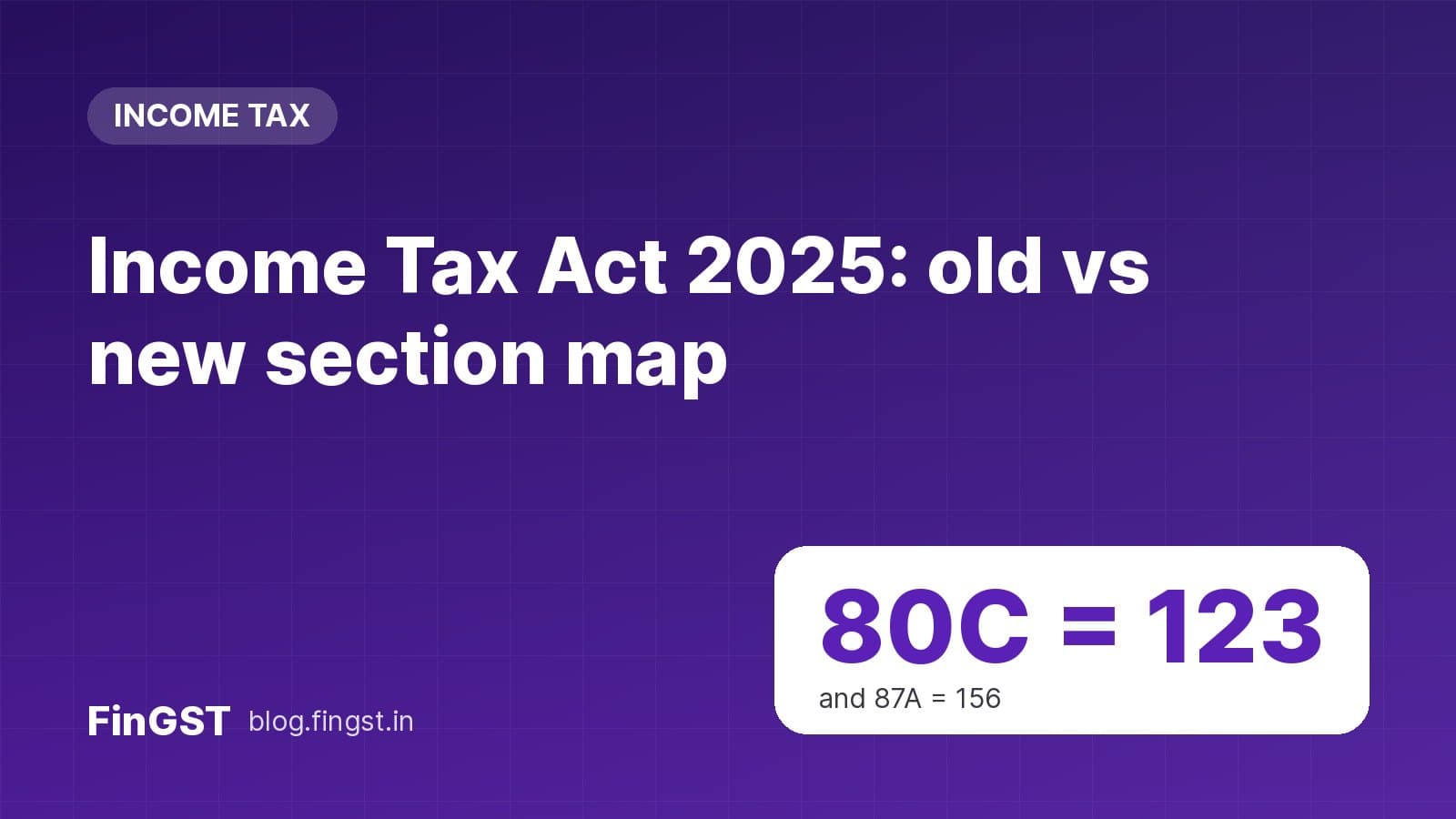
- New section numbers. Familiar sections such as 80C, 194J and 234F have new numbers. Expect forms, TDS certificates and challans to show new references.
- New form numbers. Many forms were renumbered under the 2026 Rules. The e-filing portal maps old forms to new ones.
- The same slabs and rates. The new-regime slabs and the rebate making income up to ₹12 lakh tax-free carried over.
- Clearer language. Many provisos and explanations were turned into tables.
What to do
- Keep using old section references for AY 2026-27 matters, such as a notice about your FY 2025-26 return.
- Use new references for tax year 2026-27, for example when you ask your employer about a TDS deduction.
- If a notice, form or certificate quotes an unfamiliar section, check CBDT's mapping tables or ask your adviser before you assume something has changed.