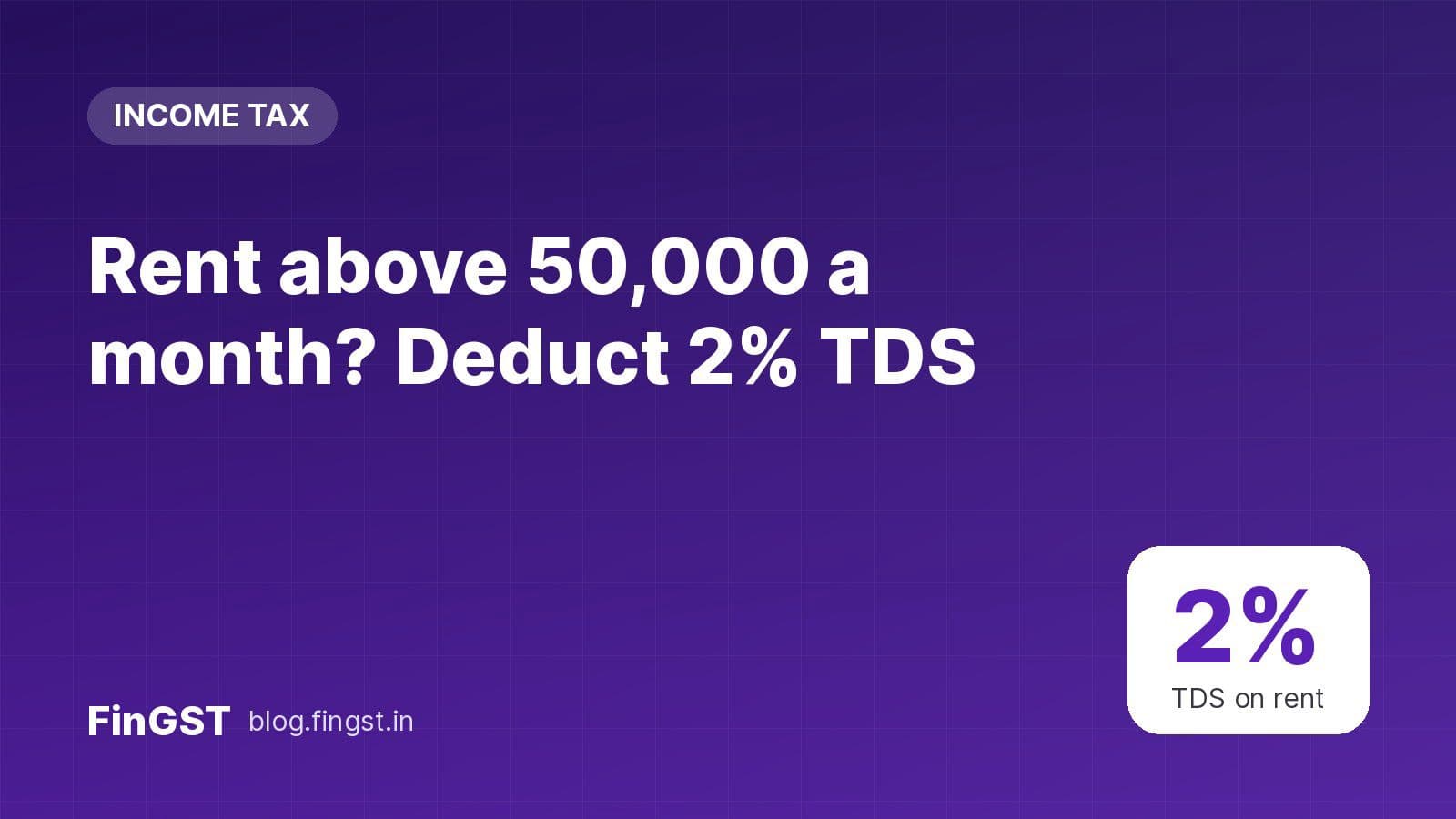
Many salaried tenants in big cities pay more than ₹50,000 a month in rent and have never heard of this rule. It applies to individuals and HUFs who are not required to deduct TDS under the regular rules, which in practice means most salaried people.
The rule was Section 194-IB under the 1961 Act. It carries over into the Income-tax Act, 2025 for rent paid from April 2026.
The rule
| Item | Detail |
|---|---|
| Who deducts | Individual or HUF tenant not liable to tax audit |
| When it applies | Rent above ₹50,000 for a month or part of a month |
| Rate | 2% (cut from 5% in October 2024) |
| When to deduct | Once: from the rent for the last month of the tax year, or the last month of the tenancy if earlier |
| No PAN from landlord | 20%, capped at the last month's rent |
Tenants don't need a TAN for this.
Example
You pay ₹60,000 a month from April 2026 to March 2027, so ₹7,20,000 for the year. TDS is 2% of ₹7,20,000 = ₹14,400, deducted from the March 2027 rent. You pay the landlord ₹45,600 for March and deposit ₹14,400 with the government.
How to deposit and report
- File the challan-cum-statement on the e-filing portal: e-Pay Tax → TDS on rent of property. This was Form 26QC; the new rules may show a different form number.
- Deposit within 30 days from the end of the month of deduction.
- Download the TDS certificate from TRACES and give it to the landlord within 15 days.
If you miss it
- Interest on late deduction and late payment (1% to 1.5% a month).
- Late fee of ₹200 a day for the statement, up to the TDS amount.
- Possible penalty for failure to deduct.
Tips
- Get the landlord's PAN at the start of the tenancy, because the rate without it is ten times higher.
- If you claim HRA, your employer may ask for the landlord's PAN anyway (it's required above ₹1 lakh a year).
- Joint landlords: the ₹50,000 limit is usually tested per landlord's share.